Parkland Estates Tampa Home Buying: Price the Lot First
July 23, 2026
July 23, 2026
Redfin put the January 2026 median sale price in Parkland Estates at $3.0 million, up 301% year over year. Movoto put the March 2026 median list at $1.99 million. Homes.com put the trailing twelve-month median at $2.25 million. Zillow's home value index landed near $1.64 million at the end of January. All four numbers describe the same fourteen streets in the same quarter.
The gap between them is not a data error. It is the shape of a market where roughly fourteen homes closed in the last twelve months, and where a single estate sale on a premium lot can drag a monthly median a million dollars in either direction. If you are comparing Parkland Estates against Palma Ceia or Beach Park on a spreadsheet, the median you pull will tell you almost nothing about what the next house you tour will trade for.
The number that actually matters is a City of Tampa building-department threshold most buyers have never heard of. It reshapes the math on every 1920s home in the neighborhood.
The City of Tampa's floodplain administration follows a FEMA standard: if the cost of repairs or improvements on a home in Zone AE, Coastal A, or VE exceeds 50% of the structure's pre-damage depreciated value on the Hillsborough County Property Appraiser record, the entire building must be brought into compliance with current Florida Building Code flood-resistant construction standards. That is documented on the City's hurricane page and enforced through the permit desk.
For a buyer looking at an original 1920s home in Parkland Estates, this is the friction point that determines whether a renovation is a project or a rebuild. The neighborhood sits low and close to Hillsborough Bay. Much of the older housing stock was built before 1975, which is the year FEMA began mapping flood risk for the Tampa Bay area in a way that pushed new construction above base flood elevation. A charming bungalow with a $600,000 depreciated structure value on the appraiser record hits its 50% ceiling at $300,000 of improvements. That is a kitchen, two baths, and a roof. Cross the threshold, even with cumulative permits over several years, and the whole house has to come up to code, which for a slab-on-grade structure usually means elevating or rebuilding.
The Florida Building Code moves to its 9th Edition on December 31, 2026, which will tighten the ratchet again on any post-storm reconstruction. Buyers who assume they can renovate quietly over time are underwriting a set of rules that are getting stricter, not looser.
Once you accept that the improvement ceiling is fixed, the lot becomes the asset. In Parkland Estates the developed street grid runs between Swann Avenue, Morrison Avenue, Lincoln Avenue, and Howard Avenue, inside ZIP 33609. Individual parcels typically measure around 60 feet wide by 125 to 160 feet deep, roughly 7,800 to 10,000 square feet, with a handful of larger holdings pushing past 0.4 acre. Confirm any specific parcel through the Hillsborough County Property Appraiser.
What separates a $1.6 million comp from a $3 million comp on the same block usually is not square footage. It is:
None of these read on a portal thumbnail, which is why the medians diverge.
Roughly, the closings in Parkland Estates fall into three groups.
The entry tier is the original or lightly updated 1920s home on a standard lot. These trade at a condition discount, often in the $1.2 to $1.5 million range depending on the month, because buyers are pricing in either a renovation held under the 50% cap or an eventual teardown.
The middle tier is the updated historic home or a mid-size rebuild. This is where the Zillow index sits, near $1.6 million as of late January 2026, and it is the deepest part of the inventory in any given quarter.
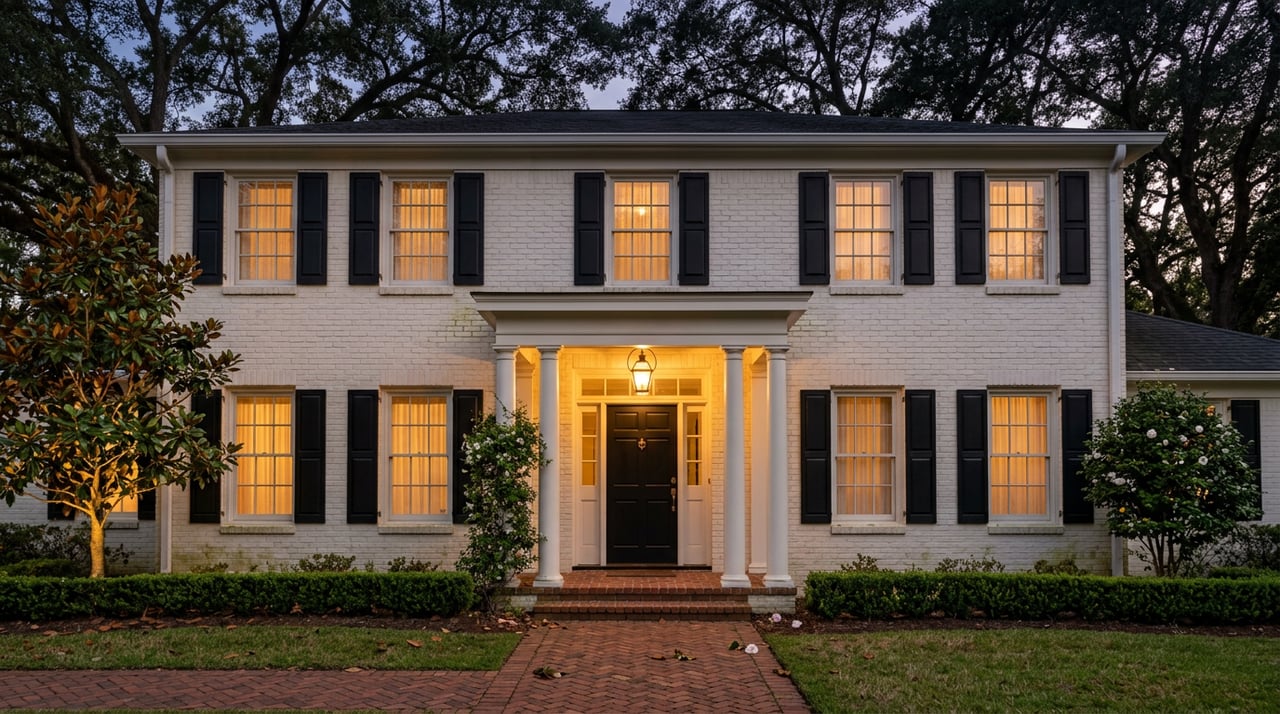
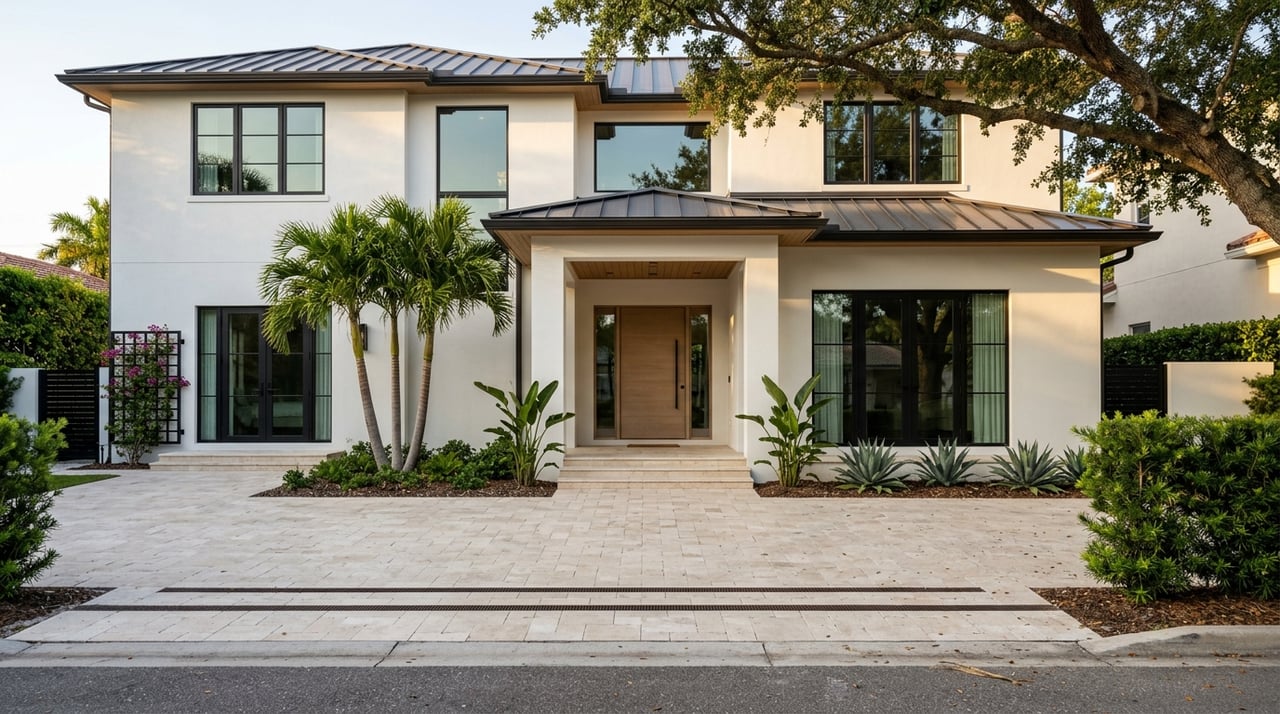
The top tier is the 21st-century custom rebuild on a premium lot, often exceeding 3,000 square feet, with the Georgian, French, Mediterranean, and Colonial Revival stylings that echo the neighborhood's original character. Homes.com's twelve-month median of $2.25 million as of early 2026 reflects a mix weighted toward this tier, and individual sales above $3 million are what create the Redfin outlier prints.
A buyer who anchors on one median is comparing three different products at once.
Helene and Milton were not abstract stress tests. In the Tampa Bay Times, HH Insurance president Jake Holehouse wrote in October 2024 that many non-elevated homes built before FEMA's flood mapping took hold experienced three to four feet of interior water. That is the profile of a subset of Parkland Estates housing stock.
The insurance math after such a claim is unforgiving. The National Flood Insurance Program caps structure coverage at $250,000 and contents at $100,000, regardless of whether the home is worth $1.5 million or $3 million. Standard homeowners policies exclude flood entirely. Private flood carriers cover higher limits, and their appetite for pre-1975 slab construction is uneven and priced accordingly.
The City of Tampa participates in the NFIP Community Rating System, which produces a discount on premiums for properties inside the city because of local floodplain management. That discount is real, but it does not close the gap between a 1920s slab home and a modern elevated build with an Elevation Certificate on file.
For a home in this neighborhood, the order of operations matters more than the number of items:
None of the above is an argument against Parkland Estates. It is an argument for pricing the home in front of you correctly. The reason the neighborhood commands what it commands is the durable value floor set by location: a short walk to Hyde Park Village and the South Howard corridor, dinner reservations at Bern's Steak House and Bulla Gastrobar, proximity to Palma Ceia Golf & Country Club, the Cal Dickson Tennis Center, the Henry B. Plant Museum, and HCA Florida South Tampa Hospital just north on Swann Avenue. Simms Park sits inside the neighborhood itself, named for original developer Allen J. Simms, who also built the Floridian Palace Hotel, downtown's tallest building from 1927 to 1966.
That walkable footprint is what keeps buyers in the market at any of the three price tiers. What it does not do is make the median a useful negotiating anchor.
Why do the published medians for Parkland Estates disagree so much? Because roughly fourteen homes closed in the trailing twelve months per Homes.com's early 2026 read, and each source uses a different window and a different mix of listings versus closings. A single $4 million estate sale in a slow month moves the median by seven figures. Ask for a rolling six to twelve month comp set tailored to your target lot size and condition tier.
Does the 50% rule apply if I do the work in phases? The City of Tampa applies the threshold cumulatively for substantial improvement and substantial damage determinations. Sequencing permits does not reset the clock. Confirm the current interpretation with the City's floodplain administrator before scoping a multi-phase renovation.
Is an Elevation Certificate worth ordering if the seller did not provide one? For a pre-1975 home in this neighborhood, yes. It sets the baseline for insurance quotes, for the 50% math, and for any future rebuild-in-place scenario. It is a diligence document, not a formality.
How should I think about flood insurance limits on a home priced above $1.5 million? The NFIP maximum of $250,000 structure and $100,000 contents is the federal floor. Above that, coverage comes from the private flood market, and quotes vary widely based on build year, elevation, and prior claims history at the address. Get a written quote before you remove the inspection contingency.
The buyers who do well in Parkland Estates are the ones who stop comparing headline medians and start comparing lots, elevations, and appraiser records. That is the read that survives a hurricane season and a code revision.
If you are weighing a home here and want a comp set built the way this post describes, along with a candid view of what the 50% rule will do to your renovation plan, Odio Team works these South Tampa blocks house by house. Contact us to start the conversation before you tour.
Stay up to date on the latest real estate trends.
We bring together a mix of integrity, imagination and an inexhaustible work ethic, striving to make each buying and selling experience the best possible. Contact us today to find out how we can be of assistance to you!
Get In Touch With Our Team To Learn More
ADDRESS 3615 Bromley Grand Ave Tampa FL 33607