On Harbour Island, Two Condos at the Same Price Can Cost Very Different Amounts to Own
August 27, 2026
August 27, 2026
In April 2026, a two-bedroom unit at Parkcrest Harbour Island closed for $495,000 on 1,184 square feet, or $418 a square foot. Two months later, a similarly sized two-bedroom at Harbour Place City Homes, half a mile away on the same island, closed for $460,000 on 1,200 square feet, or $383 a square foot. The gap is real but small, the kind of spread a buyer might chalk up to floor level or a renovated kitchen.
What the price per square foot does not show is that Parkcrest was built in the mid-2000s and will not face its own mandatory structural inspection under Florida law until around 2030. Harbour Place City Homes was built in 1998 and 1999, and already crossed that same threshold two or three years ago. One association is years from writing its first structural report. The other has already had that conversation, and its owners already know what it found.
That gap between two similarly priced units is the real story of buying into Harbour Island right now, and it has almost nothing to do with the view.
Florida's building safety statute, passed after the 2021 Surfside collapse, requires condominium and cooperative buildings three habitable stories or taller to complete a milestone structural inspection once the building reaches 30 years of age, based on its certificate of occupancy date, and every 10 years after that. Buildings within three miles of a coastline or tidal water face that deadline five years earlier, at 25 years instead of 30. Harbour Island sits directly on Tampa Bay, wrapped by the Garrison Channel and the Seddon Channel, so every building on the island falls under the accelerated schedule rather than the standard one.
A second piece of the law changes the math for buyers even more directly. Every association covered by the inspection rule must also complete a Structural Integrity Reserve Study, and starting with budgets adopted for 2026, the money set aside for the eight components that study covers, things like the roof, load-bearing structure, plumbing, and waterproofing, can no longer be reduced or waived by a vote of the owners. Older Florida buildings spent years keeping dues low by voting down full reserve funding. That option is gone. You can review the specific inspection timeline and filing process on the City of Tampa's condo recertification page.
Harbour Island's condo stock did not rise all at once. It went up in waves across roughly two decades, and every wave now sits at a different point on the state's calendar.
| Building | Built | Profile | Where it sits on the 25-year coastal clock |
|---|---|---|---|
| Seddon Cove | Late 1980s | 72 units across 3 brick, mid-rise buildings | Already decades past, into a second or third 10-year recertification cycle |
| Harbour Court | 1987 | 126 units, two 8-story towers | Crossed in the early 2010s, required to have completed its first inspection under the state's 2024 catch-up deadline |
| Harbour Place City Homes | 1998 to 1999 | 206 units, 3 stories | Crossed in 2023 to 2024 |
| The Garrison | 2002 | 12 residences with private elevators and garages | Arrives in 2027 |
| The Grandview | 2003 | 64 units | Arrives in 2028 |
| Parkcrest Harbour Island | Mid-2000s | 333 to 334 units, 8 to 9 stories | Arrives around 2030 |
| The Plaza at Harbour Island | 2007 | Larger floor plans up to 4,400 square feet | Arrives around 2032 |
Seddon Cove and Harbour Court, the island's two original residential communities, are far enough past even the accelerated threshold that their boards have almost certainly already worked through at least one full inspection and recertification cycle. Harbour Place City Homes crossed the line right as the law was tightening into full effect. The Garrison and The Grandview, both early-2000s buildings, have their own dates arriving inside the next two years. Parkcrest and The Plaza have the most runway before their own inspections, though runway is not the same as being exempt.
Age determines when the state forces a building through its first inspection. It has no bearing on the other half of the 2025 law. Every Harbour Island association three stories or taller, including buildings decades from their own milestone date, had to build a Structural Integrity Reserve Study into its 2026 budget, and that funding line cannot be voted away. A buyer at Parkcrest or The Plaza who assumes a newer building means a lighter dues bill is only half right.
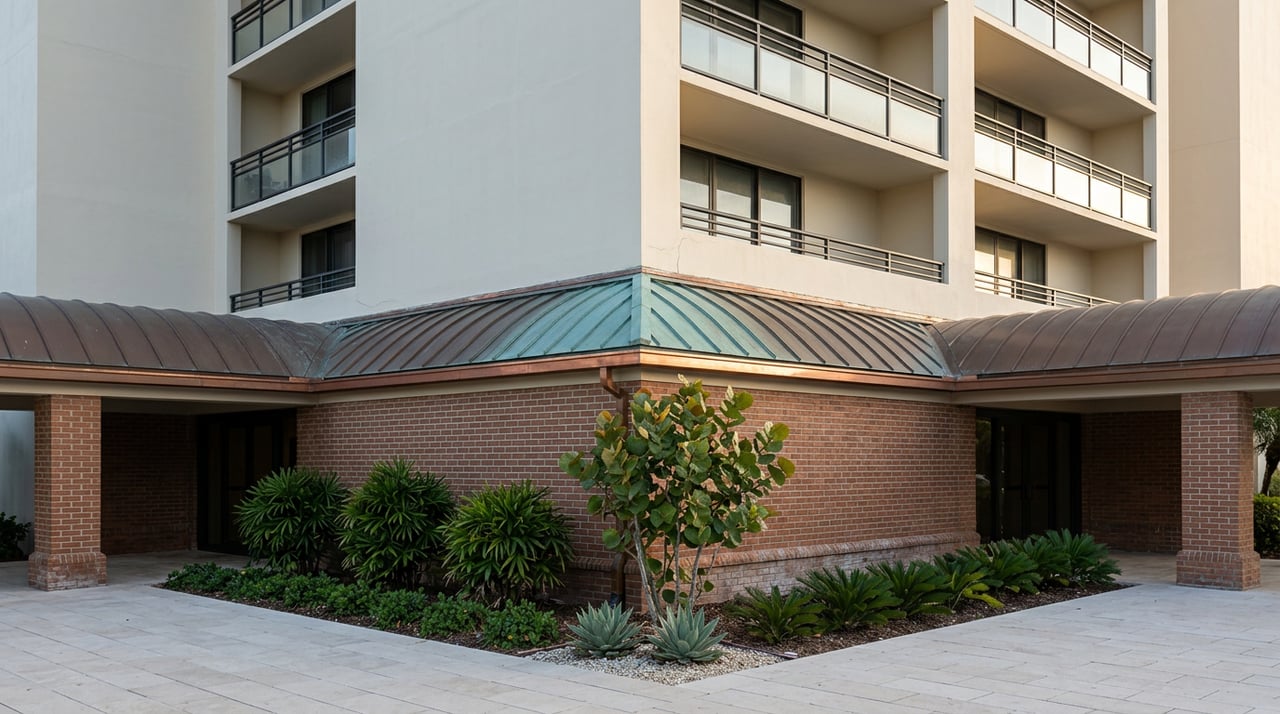
A sale this year makes the point well. A two-bedroom at Seddon Cove, the island's oldest community and the one furthest into its inspection cycle, closed in March 2026 for $1,160,000 on 1,734 square feet, or $669 a square foot, comfortably the highest per-square-foot figure among the recent sales examined here. Seddon Cove's low density, its brick exteriors and copper roofs, and its optional boat slips carry a premium that has nothing to do with reserve funding and everything to do with land and architecture Harbour Island does not build anymore.
That premium tells a buyer what the market thinks the community is worth. It says nothing about what the current reserve study shows, or whether a conversation about a future assessment is already in board minutes that have not made it into an MLS listing.
The consequences of this law are not limited to condo dues. Lenders now run a project review on the association itself before approving a mortgage, and Fannie Mae tightened its guidance again in early 2026. A building can be treated as non-warrantable for a failed or incomplete milestone inspection, non-compliance with SIRS, a reserve fund below the required threshold, inadequate master insurance, or a pending special assessment that meaningfully affects the project's finances. Any of those findings can surface after a buyer is already under contract, changing the rate offered, the down payment required, or the loan approval itself.
The cost is already showing up regionally. HOA fees across the Tampa-St. Petersburg metro rose 17.2 percent year over year as of early 2026, the steepest jump of any major metro in the country, as associations that spent years underfunding reserves catch up all at once against construction costs running 20 to 30 percent above 2020 levels. That is a citywide pattern, and on Harbour Island it plays out building by building depending on exactly where each association sits on the timeline above.
Florida law gives condo buyers a three-day window to review association documents and rescind a contract. That window only protects you if someone who can actually read a reserve study is standing by to use it, not after the fact.
Does a completed milestone inspection mean a building is finished paying for structural work? No. An inspection identifies problems. It does not fund the repair. If Phase 2 testing finds substantial deterioration, the association still has to pay for it, whether from existing reserves, a special assessment, or financing.
Does the reserve funding requirement really apply to newer buildings like Parkcrest or The Plaza? Yes. The funding mandate applies to any condominium three stories or taller once a budget is adopted for 2026 or later, regardless of the building's age. A tower decades from its own milestone inspection can still see dues rise to meet that line.
How do I know whether the 25-year rule or the 30-year rule applies to a specific building? It comes down to distance from tidal water. Because Harbour Island sits on Tampa Bay, every building here falls under the 25-year schedule. The association or the City of Tampa's construction services office can confirm the exact certificate of occupancy date the clock runs from.
Buying on Harbour Island means buying into a specific point on a state-mandated calendar as much as it means buying a floor plan. Heidi Odio works with buyers comparing Harbour Island buildings directly, reading the reserve studies and board minutes before an offer goes in rather than after. If you are weighing two units that look identical on paper, reach out and let's find out what the boards already know.
Stay up to date on the latest real estate trends.
We bring together a mix of integrity, imagination and an inexhaustible work ethic, striving to make each buying and selling experience the best possible. Contact us today to find out how we can be of assistance to you!
Get In Touch With Our Team To Learn More
ADDRESS 3615 Bromley Grand Ave Tampa FL 33607